Cordless vacuum battery care
Quick answer
A lithium vacuum battery loses capacity through both cycle count and calendar aging, roughly 4% a year from age alone, and typically reaches about 80% of its original capacity somewhere between 300 and 600 charge cycles. A pack delivering roughly 80% of its rated runtime after a few years of normal use is aging as expected, not failing.
Lithium battery chemistry and published cycle-life figures, plus manufacturer charging and disposal guidance.
Why your cordless vacuum runs shorter every year, even if you barely use it
Lithium battery packs age in two separate ways that run at the same time. The first is cycle aging: every full charge and discharge cycle wears the internal chemistry slightly, and most vacuum packs are rated for somewhere between 300 and 600 cycles before capacity falls to about 80% of new. The second is calendar aging, which happens regardless of use: the chemistry inside a lithium cell degrades slowly just from existing, at a rate of roughly 4% capacity loss per year. This means a pack that has barely been used still loses some capacity every year it sits on a shelf or in a garage.
Because both effects run simultaneously, a battery that is a few years old and now delivers noticeably less runtime than it did new is very likely behaving exactly as designed rather than showing a fault. Reaching around 80% of original rated runtime after a few years of regular use is a normal outcome, not a sign the pack needs replacing. Runtime loss becomes a concern worth investigating when it drops much further than that, or drops suddenly rather than gradually.
Eco versus boost: why the runtime number on the box is never what you get
The runtime figure printed on a cordless vacuum's box or listing is almost always the eco or lowest power mode figure, since that is where the motor draws the least current and the battery lasts longest. Boost or max power modes draw dramatically more current from the same pack, and runtime in boost typically drops to somewhere around a quarter to a third of the eco figure, meaning boost mode runs the pack down roughly three to four times faster than eco. A vacuum rated for 60 minutes is describing eco mode; expect something closer to 15 to 20 minutes if you run it in boost the whole time.
This gap matters when you are trying to judge whether a pack is aging normally. If your actual cleaning routine leans heavily on boost mode for carpet or pet hair, your real-world runtime was never going to match the box figure even with a brand new battery, and comparing your lived experience against the printed eco number will make a perfectly healthy battery look like it is failing.
Replacement batteries and the filters that get blamed for them
- KEEPOW
KEEPOW Vacuum Filters Compatible with Bissell Febreze Style 1214
$7.99 Check pricePrices change often - Colorfullife
Vacuum Filter Replacement for Shark Navigator dlx NV60 NV70 NV71 NV80 NV90
$16.98 Check pricePrices change often - Miele
Miele Vacuum Cleaner Active HEPA Filter 315606 SF-HA30 MIE1003 [MIE1003]
$39.99 Check pricePrices change often - Shark
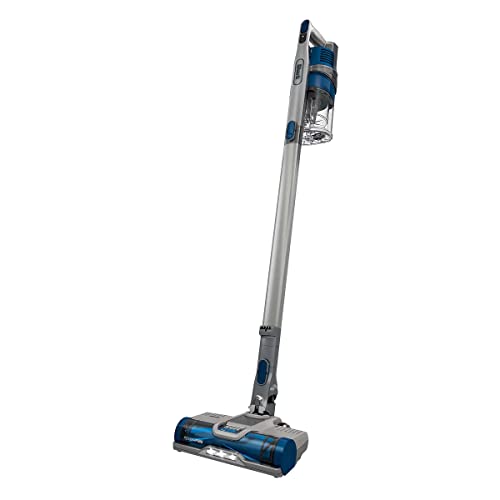
Shark Pet Plus Cordless Stick Vacuum, Raspberry, IZ163H
$299.99 Check pricePrices change often




The filter test: ruling out the most common false alarm
A restricted or clogged filter produces symptoms that are nearly identical to a failing battery: shorter runtime and weaker pickup, arriving together. This happens because a clogged filter forces the motor to work harder to move the same amount of air, which draws more current from the pack for the same result, draining it faster while also delivering less suction at the floor. Because both symptoms show up at once, it is easy to assume the battery has failed when the actual cause is sitting in the filter housing.
Before concluding a battery needs replacing, check and clean or replace the filter first, run the machine again, and see whether runtime recovers. This single check rules out the most common cause of an apparent battery problem and can save the cost of an unnecessary replacement pack.
Charging habits that actually matter, and ones that do not
Modern cordless vacuum chargers stop delivering current once the pack reaches full charge, so leaving a vacuum docked continuously does not overcharge it and is not a meaningful source of extra wear on machines made in roughly the last decade. What does matter more is temperature and state of charge during storage: heat accelerates the chemical aging process inside a lithium cell far more than normal charge and discharge cycling does, and storing a pack fully drained for an extended period accelerates capacity loss compared to storing it partially charged.
A garage or shed that swings between freezing temperatures and high heat across the year is a particularly poor storage environment for a lithium pack, combining both risk factors at once if the vacuum also happens to sit there uncharged for long stretches. Where possible, store the machine indoors at a moderate, stable temperature, and avoid leaving it fully drained for weeks at a time.
When a battery pack needs replacing versus when it needs recycling
A pack that has simply aged, delivering reduced but still usable runtime after years of normal cycles and calendar time, is a candidate for an ordinary replacement: order a compatible pack, swap it, and continue using the machine. This is a routine maintenance decision, not a safety issue, and is expected of any lithium-powered cordless tool after a few years.
A pack that is swollen, unusually hot without being on charge, leaking, or has visible physical damage from a drop or impact is a different situation entirely. That pack is not a candidate for continued use or for a DIY repair of any kind, and the safety steps below apply regardless of how old the pack is or how it got damaged.
| Factor | Effect on battery life | What to do |
|---|---|---|
| Heat (garage, hot car, direct sun) | Accelerates chemical aging significantly | Store indoors at moderate temperature |
| Storing at empty charge | Accelerates capacity loss | Store partially charged, not fully drained |
| Leaving on the charging dock | No meaningful harm on modern machines | Fine to leave docked; charger stops at full |
| High cycle count | Gradual, expected capacity loss | Normal; ~300 to 600 cycles to 80% capacity |
| Calendar age alone | Roughly 4% loss per year, even unused | Normal; cannot be prevented, only slowed |
| Cold temperature during use | Temporary reduced output, not permanent damage | Let the pack warm before heavy use in cold rooms |
Before assuming a battery has failed, rule out the filter. A restricted filter makes the motor work harder for the same airflow, which drains the pack faster and reduces pickup at the same time, mimicking the exact symptoms of a dying battery.
Safety
A lithium pack that has visibly swollen, feels hot without charging, is leaking, or has been physically damaged (dropped, crushed, punctured) should be taken out of service immediately and not charged again. Keep it away from flammable material and other batteries, and take it to a dedicated battery recycling point.
Damaged lithium cells have caused fires in waste collection trucks and sorting facilities. Every lithium vacuum battery, whether dead of old age or physically damaged, needs to go to a battery recycling drop-off, never into general trash or standard recycling bins.
Common questions
Is it bad to leave my cordless vacuum on the charging dock all the time?
No, on any machine made in the last decade or so, leaving it docked is fine. The charging circuitry stops delivering current once the pack reaches full charge, so it is not being continuously overcharged while sitting on the dock. This is generally more convenient and no more damaging than unplugging it between uses.
My battery only lasts about 80% as long as it used to. Is it failing?
Not necessarily. Lithium packs lose capacity through cycle count and calendar aging simultaneously, and reaching roughly 80% of original capacity after a few years of normal use, or somewhere in the range of 300 to 600 charge cycles, is the expected aging curve, not a defect. If runtime has dropped much further than that, or dropped suddenly, that is worth investigating further.
My runtime dropped suddenly and pickup got worse too. Is the battery dying?
Check the filter before assuming the battery has failed. A restricted or clogged filter makes the motor work harder for the same result, which drains the battery faster and reduces pickup at the same time, producing symptoms that look identical to battery failure. Clear or replace the filter first, then reassess runtime.
What should I do with a battery that feels hot, swollen or is leaking?
Stop using it immediately. A swollen, hot, leaking or physically damaged lithium pack is not repairable and should not be charged or used again. Keep it away from anything flammable and take it to a battery recycling point rather than continuing to handle it as a normal battery.
Can I throw a dead vacuum battery in the regular trash or curbside recycling?
No. Lithium battery packs must never go into household waste or standard kerbside recycling. Damaged or crushed cells in a collection truck or sorting facility have started fires. Take any lithium vacuum battery, dead or damaged, to a dedicated battery recycling drop-off point.
Does storing my vacuum in a hot garage damage the battery?
Yes, heat is one of the most damaging conditions for a lithium pack, and a garage that swings between freezing in cold weather and very hot in warm weather is a particularly poor storage environment. Combined with storing the pack fully drained, that swing accelerates capacity loss well beyond normal calendar aging. Indoor storage at a moderate, steady temperature is much better for long-term capacity.
Every figure here comes from published manufacturer specifications, owner reported measurements and repair documentation, and each is labelled as either a standard or a convention. This is researched general information to help you diagnose and plan, not professional advice, and it cannot tell you what is wrong with one particular machine. Your own manual and the part number printed on your machine are the final word.