Vacuum filters
Quick answer
There are four common types of vacuum filter: a washable foam or felt pre-filter, a pleated cartridge, a HEPA filter and, on bagged machines, the bag itself. Rinse a washable pre-filter about monthly and replace it yearly; replace a pleated or HEPA filter every six to twelve months and never wash it unless the maker says it is washable. Match a replacement to the part number on your old filter, not to the brand. Current listings run under $25 to under $100 across 40 options.
Budget bands and fitment claims come from the listings themselves. The service intervals are conventions rather than specifications.
Types of vacuum filter
| Filter type | Where it sits | Clean | Replace |
|---|---|---|---|
| Foam or felt pre-filter | Before the motor, catching coarse dust | Rinse about monthly, dry fully for 24 hours | About yearly |
| Pleated cartridge | Main filter on many bagless uprights and sticks | Tap out, do not wash unless labelled washable | Every 6 to 12 months |
| HEPA | Exhaust or main stage, for fine particles | Tap out; wash only if the maker says so | Every 6 to 12 months |
| Bag | Collection and filtration on bagged machines | Not cleaned | At about two thirds full |
| Exhaust or post-motor filter | After the motor, cleaning the air leaving the machine | Per the manual | Per the manual, often yearly |
Filters currently listed
An even spread across the price range rather than the cheapest options, so the grid reflects what is genuinely available.
- KEEPOW
KEEPOW Vacuum Filters Compatible with Bissell Febreze Style 1214
Under $25 Check priceBudget band; Amazon shows the current price - keluke
Keluke Replacement Vacuum Filters Kit for Dyson V7 V8 SV10
Under $25 Check priceBudget band; Amazon shows the current price - E-HAO
E-HAO Vac HEPA Filters for iRobot Roomba Essential/104/105/105x/Q/Y Series
Under $25 Check priceBudget band; Amazon shows the current price - Dttery
Dttery NV350 NV352 NV356E NV360 Foam Filter Replacement for Shark Vacuum
Under $25 Check priceBudget band; Amazon shows the current price - Dttery
Dttery NV42 NV44 NV46 Vacuum Filter Replacement for Shark Navigator Deluxe
Under $25 Check priceBudget band; Amazon shows the current price - JoyBros
Replacement Filter for iRobot Roomba i,e,j Series Robot Vacuum Cleaners
Under $25 Check priceBudget band; Amazon shows the current price - Colorfullife
Vacuum Filter Replacement for Shark Navigator Lift Away NV350 NV352 NV360
Under $25 Check priceBudget band; Amazon shows the current price - Miele
Miele Vacuum Cleaner Active HEPA Filter 315606 SF-HA30 MIE1003 [MIE1003]
Under $50 Check priceBudget band; Amazon shows the current price - Miele
Miele HEPA AirClean 30 Filter (2 Pack)
Under $100 Check priceBudget band; Amazon shows the current price


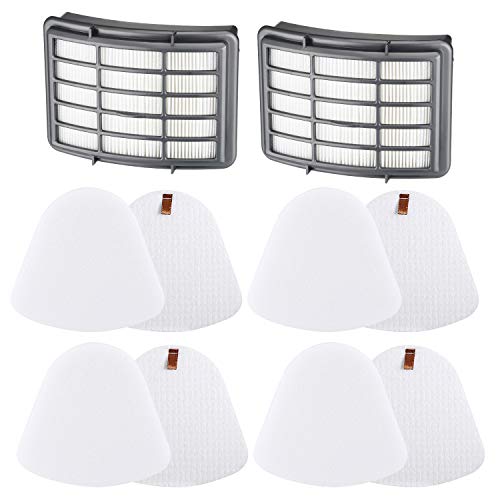

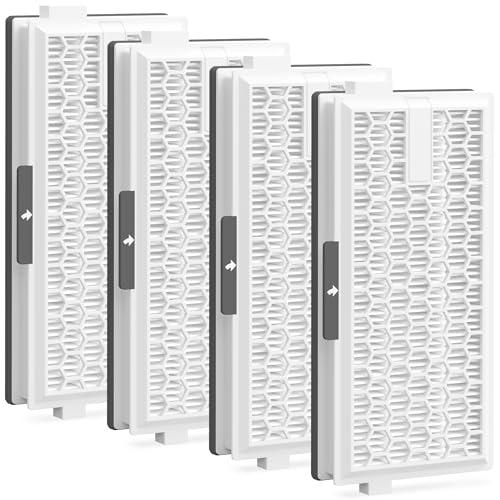


The fitment shown on this page is what each listing itself claims, not a compatibility check we have run. Read the number off your own part, or the model number on the plate on the machine body, and match that against the listing before ordering. This is the step that goes wrong most often and it costs nothing to get right.
By brand
Listings naming a specific brand, with the count of current options. Each of these goes to a page with the fitment notes and prices for that brand.
What this part does, and what a worn one costs you
The element that keeps the airflow clean and the motor cool. A loaded filter throttles the whole machine and is the single most common cause of lost suction.
A washable foam or felt pre-filter wants rinsing about monthly and replacing yearly. A sealed pleated or HEPA element is replaced every six to twelve months and never washed.
Sources
- HEPA definition: the United States Department of Energy standard for HEPA filters, at least 99.97 percent capture of 0.3 micron particles; the European EN 1822 grades such as H13 are the equivalent scale used on many listings.
- Cleaning and replacement intervals: the service intervals printed in manufacturers' manuals, used here as a starting point rather than a rule.
- Prices and fitment: the listings themselves, checked in 2026.
The other parts worth keeping ahead of
Filters, bags, belts, brush rolls, batteries and hoses are owner replaceable on almost every household machine, need nothing beyond a screwdriver, and between them account for the clear majority of vacuums thrown away while fundamentally sound.
Common questions
How do I know which replacement filter my vacuum needs?
Match the filter to your exact model number, not to the brand. Look for the model on the label under the dust bin or in the manual, then compare it with the part number or the compatible-models list on the replacement filter listing. A foam pre-filter, a pleated cartridge and a HEPA filter are different parts, so buy the type your machine already has.
What are the types of vacuum filters?
The common types are a washable foam or felt pre-filter, a pleated cartridge filter, a HEPA filter and, on bagged machines, the bag itself, with some machines adding a separate exhaust filter after the motor. A HEPA filter is defined by what it captures: at least 99.97 percent of particles at 0.3 microns under the US Department of Energy definition.
How often should you change a vacuum filter?
Rinse a washable foam or felt pre-filter about monthly and replace it about once a year. Replace a pleated or HEPA filter every six to twelve months. Homes with shedding pets or heavy use sit at the short end of both ranges, and the schedule in your own manual wins over any general figure.
How do I know which filter fits my machine?
Take the old part out and read the number moulded or printed on it, then match that number against the listing rather than matching on brand. Makers run several ranges that look alike from the outside and take entirely different parts, so a brand match is not a model match. Where the old part has no number, the plate on the machine body carries the model number a listing is keyed to.
How often should a filter be replaced?
A washable foam or felt pre-filter wants rinsing about monthly and replacing yearly. A sealed pleated or HEPA element is replaced every six to twelve months and never washed. The interval is a starting point rather than a rule, because what actually drives it is how much passes through the machine. A home with shedding pets works through consumables roughly twice as fast as one without, and the guidance in your own manual should win over any general figure.
Are third party parts worth buying?
Sometimes, and the useful test is whether the listing states a specification. A part that names its dimensions, its media grade where relevant, and the specific models it fits is worth considering at any price. One that lists dozens of compatible models with no specification at all is asking you to trust a claim it has not made concrete.
Why does a worn part cost me so much performance?
Because most vacuum parts fail gradually rather than outright, so the performance loss arrives quietly and gets attributed to the machine as a whole. That is the mechanism by which working vacuums end up replaced: nothing broke, several cheap things wore, and the sum of them felt like a machine reaching the end of its life.
Can I clean this instead of replacing it?
It depends whether the problem is contamination or wear, and the two produce similar symptoms. Cleaning fixes contamination completely and does nothing at all for wear, so it is worth establishing which one you have before ordering. The diagnostics on this site work through that distinction for each part.
Every figure here comes from published manufacturer specifications, owner reported measurements and repair documentation, and each is labelled as either a standard or a convention. This is researched general information to help you diagnose and plan, not professional advice, and it cannot tell you what is wrong with one particular machine. Your own manual and the part number printed on your machine are the final word.