Bagged against bagless
Quick answer
The Miele Classic C1 Cat & Dog ($619.98) is a bagged canister where the bag itself acts as a filtration layer, trapping fine dust before it reaches the exhaust filter. The Miele Blizzard CX1 Turbo Team ($510.30) is a bagless canister with a certified HEPA filter but no bag wall ahead of it, and it empties with a visible puff of dust each time. Bagged systems generally get the allergy recommendation because of the bag's own filtering role, not just whatever filter sits behind it.
Published manufacturer specifications, plus general filtration and allergy-care conventions where noted.

Miele Classic C1 Cat & Dog Bagged Canister for Deep Carpet Cleaning
For anyone managing dust allergies specifically, the bagged Miele Classic C1 is the safer default because emptying it never exposes you to airborne dust the way tipping out a bagless bin does. For a household without allergy concerns that wants to skip the recurring bag cost, the bagless Blizzard CX1 with its certified HEPA filter is a reasonable alternative.
The two sides
- Bagged (Miele Classic C1 Cat & Dog)
Miele Classic C1 Cat & Dog Bagged Canister for Deep Carpet Cleaning
Its bag wall filters dust as it fills, which is why bagged systems dominate allergy recommendations independent of any additional filter stage.
$619.98 Check pricePrices change often - Bagless (Miele Blizzard CX1 Turbo Team)
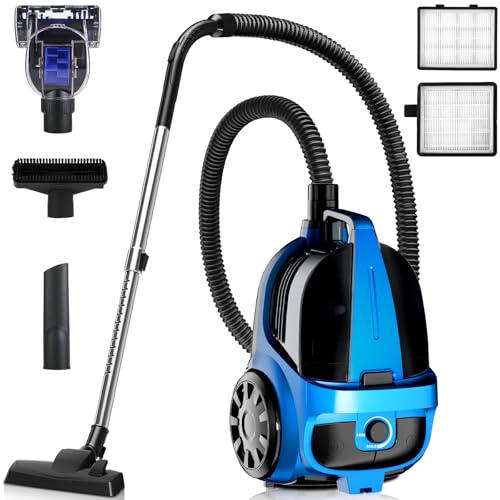
Miele Blizzard CX1 Turbo Team Bagless Canister Vacuum, Tech Blue - Portable, Household
Carries a certified HEPA filter and needs no recurring bag purchase, but empties with visible dust release each time.
$510.30 Check pricePrices change often

| Factor | Bagged (Miele Classic C1 Cat & Dog) | Bagless (Miele Blizzard CX1 Turbo Team) |
|---|---|---|
| Price | $619.98 | $510.30 |
| Certified HEPA filter listed | Not listed | Listed |
| Emptying method | Remove and discard sealed bag | Tip dustbin into trash |
| Recurring cost | Replacement bags | None beyond filter replacement |
| Format | Canister | Canister |
| Typical service life | 8 to 15 years | 8 to 15 years |
Why the bag itself matters more than whether the machine also has HEPA
A vacuum bag isn't just a container, it's a porous filtration layer that dust and fine particles have to pass through before reaching the machine's exhaust filter. That extra filtering stage is the core reason bagged machines dominate allergy recommendations, independent of whether the model also carries a separately certified HEPA filter behind it. In this pairing, the bagged Miele Classic C1 is not listed with a certified HEPA element, while the bagless Blizzard CX1 is. That doesn't flip the allergy advantage to the bagless machine, because the bag's own filtering role and the emptying method both still favor the bagged design for dust-sensitive households.
The moment that actually matters: emptying
A bagged vacuum is emptied by removing a sealed bag and dropping it directly in the trash, with essentially no dust released into the room. A bagless vacuum is emptied by opening the bin over a trash can and tipping the collected dust and debris out, which reliably kicks up a visible cloud of fine particles right at nose height. For someone with dust or pet allergies, that single moment of emptying can matter more than which filter sits deeper in the machine.
When to switch a bag, and why "full" isn't the right signal
Bag pores clog with fine dust well before the bag is physically full of visible debris, and a clogged bag chokes suction long before it looks like it needs changing. The practical rule is to swap the bag at roughly two-thirds full by volume rather than waiting until it's packed solid. Bagless systems have no equivalent running cost, but they lose all the mid-fill filtration benefit a bag provides, and any suction drop shows up as the internal filter clogging instead.
- Change a vacuum bag at about two-thirds full, not when it looks completely packed.
- A washed HEPA filter is no longer a certified HEPA filter once water has passed through the media, even if it looks intact after drying.
- Bagless systems trade a recurring bag cost for a recurring dust-exposure moment at each emptying.
What the price difference here does and doesn't tell you
The bagged Miele Classic C1 costs more than the bagless Blizzard CX1 in this pairing, which could suggest the bagged model is simply the more premium machine overall. That price gap reflects each model's specific feature set, including brush head design and accessories, rather than a general rule that bagged canisters cost more than bagless ones. Bagged and bagless machines exist across a wide range of prices in both directions, so price alone isn't a reliable signal for which filtration format a given vacuum uses.
A question people actually ask: is a bagless vacuum with HEPA just as good for allergies?
A certified HEPA filter is a genuinely useful spec on a bagless machine, but it only filters air passing through it after the bin, not the moment of emptying itself. The bag on a bagged machine adds a filtering layer during use and removes the dust-release moment at emptying entirely. For someone managing significant dust or pet allergies, both effects favor the bagged design even when the bagless competitor carries a HEPA rating the bagged one doesn't list.
Choose the bagged Miele Classic C1 if dust or pet allergies are a real household concern, since the bag filters continuously and removes the dusty emptying step entirely. Choose the bagless Blizzard CX1 if allergy exposure isn't a primary concern and you'd rather avoid the recurring cost of replacement bags, accepting the dust puff at each emptying as a tradeoff. Neither format is objectively better for every household.
Others in this category
An even spread across the price range.
- Miele
Miele Classic C1 Pure Suction Vacuum for Hard Floors & Low-Pile Carpet
$316.00 Check pricePrices change often - Miele
Miele Classic C1 Turbo Team Vacuum for Hard Floors & Low-Med Pile Carpet
$391.21 Check pricePrices change often



Common questions
Does a bagged vacuum need a HEPA filter to be good for allergies?
Not necessarily. The bag itself acts as a filtration layer as dust passes through its walls, which is a big part of why bagged machines are recommended for allergies even without a separately certified HEPA stage. A HEPA filter behind the bag adds further benefit but isn't the whole story.
Is it true that bagless vacuums release dust when you empty them?
Yes, tipping a bagless bin into the trash reliably releases some fine dust into the air at nose height, since there's no bag wall containing it during that step. This is a structural feature of the bagless design, not a defect in any particular model.
When should I change a vacuum bag?
Change it at roughly two-thirds full by volume rather than waiting for it to look completely packed. Bag pores clog with fine dust well before the bag appears full, and a clogged bag chokes airflow and suction even though there's visible room left inside.
Can I wash a HEPA filter to make it last longer?
No. Water passing through HEPA filter media permanently collapses its fine fiber structure, even if the filter looks fine once it dries. A washed HEPA filter should be treated as no longer HEPA-rated and replaced.
Does bagless mean no ongoing cost at all?
Bagless machines avoid the recurring bag purchase, but most still need periodic filter replacement to maintain suction and filtration performance, so there is still some ongoing cost, just a different one than bags.
Which type lasts longer, bagged or bagless?
Canister vacuums in either configuration typically last 8 to 15 years, the longest service life among common vacuum formats, since the bag-versus-bagless choice doesn't significantly affect motor or chassis longevity on its own.
Every figure here comes from published manufacturer specifications, owner reported measurements and repair documentation, and each is labelled as either a standard or a convention. This is researched general information to help you diagnose and plan, not professional advice, and it cannot tell you what is wrong with one particular machine. Your own manual and the part number printed on your machine are the final word.