Best upright vacuums
Quick answer
The Dyson Ball Animal 3 ($409.99) is the strongest overall pick for households with pets and mixed flooring. Budget shoppers should look at the Bissell CleanView Compact ($59.01) for a lightweight, low-cost starter, while anyone who wants the largest and most fully equipped model in the catalog should look at the Dyson Ball Animal 3 Extra ($549.99).

Dyson Ball Animal 3
The Dyson Ball Animal 3 sits just below the Extra edition in price while keeping the same core ball-steering platform built around pet hair pickup. At $409.99 it is a strong mid-to-upper pick for a household that wants Dyson build quality without paying for the extra accessory bundle in the Extra edition.
The three tiers
Beginner: Bissell CleanView Compact
A small apartment or a household that wants a light, simple upright for quick, frequent cleanups.- Beginner pick
Bissell CleanView Compact, Powerful Suction & Extension Wand, 3508
$59.01 Check pricePrices change often

The CleanView Compact is a bagless upright with an extension wand, built for quick, lightweight use rather than deep whole-house cleaning. Its small size makes it easy to store in a closet, and the compact body is noticeably lighter than a full-size upright. At $59.01 it is the least expensive upright in the catalog.
Not for: A larger home, thick wall-to-wall carpet, or a household that wants HEPA-level filtration, since the published listing does not claim a sealed HEPA filter.
Intermediate: Shark Navigator Lift-Away Vacuum, Self-Cleaning (ZU503AMZ)
A household with pets and mixed hard floor and carpet that wants a full-size upright without paying flagship price.- Intermediate pick
Shark Navigator Lift-Away Vacuum, Self-Cleaning, HEPA, Teal, ZU503AMZ
$299.99 Check pricePrices change often
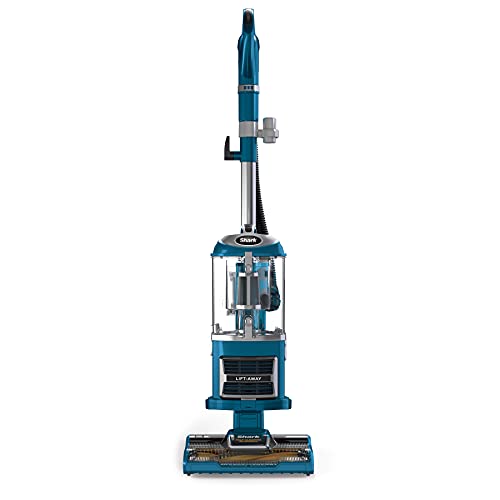
This Navigator Lift-Away model lists a self-cleaning brushroll, which reduces hair wrap-around maintenance, along with HEPA filtration for allergy-sensitive households. The lift-away canister detaches from the main body for stairs and upholstery without carrying the full upright. At $299.99 it lands solidly in the middle of the category.
Not for: Anyone who specifically wants a bagged system for easier full-bin disposal, since this is a bagless design that requires emptying and rinsing the canister by hand.
Expert: Dyson Ball Animal 3 Extra
Buyers who want the most fully equipped upright in the catalog and have committed to a corded, full-size machine for whole-house deep cleaning.
The Ball Animal 3 Extra is Dyson's top corded upright configuration in this catalog, built on the ball-steering chassis that is designed to maneuver around furniture more easily than a fixed-wheel upright. As the Extra edition, it ships with the fuller accessory set compared to the standard Ball Animal 3 below it. At $549.99 it is priced at the top of the upright category.
Not for: A small apartment, a household that wants cordless portability, or anyone unwilling to store a full-size corded upright.
| Model | Price | Filter | Bin size | Bagged or bagless |
|---|---|---|---|---|
| Bissell CleanView Compact | $59.01 | Not published | Not published | Bagless |
| Shark Navigator Lift-Away ZU503AMZ | $299.99 | HEPA | Not published | Bagless |
| Dyson Ball Animal 3 | $409.99 | Not published | Not published | Bagless |
| Dyson Ball Animal 3 Extra | $549.99 | Not published | Not published | Bagless |
Carpet cleaning on an upright depends on the brush roll, not the motor alone
An upright vacuum cleans carpet mainly through agitation: a driven brush roll beats and lifts embedded dirt out of the fibers so the airflow can carry it into the bin. Motor power matters for airflow and lift, but a strong motor paired with a worn or tangled brush roll will still underperform on carpet compared to a properly maintained one. Several models in this roundup, including the Shark Navigator Lift-Away in the middle tier, specifically market a self-cleaning brushroll to cut down on hair and fiber wrap that reduces agitation over time.
Check a brush roll for wrapped hair and thread periodically regardless of which model is chosen; a wrapped roll spins slower and agitates less effectively even when the motor sounds fine.
Bagged versus bagless: what actually changes
A bagged upright seals dust and allergens inside a disposable bag that is thrown away full, which tends to keep more fine dust contained during disposal. A bagless upright uses a clear canister that must be emptied and often rinsed by hand, which some owners find messier but which avoids the ongoing cost of buying replacement bags. Most models in this specific roundup are bagless; anyone who specifically wants a bagged system for allergy reasons should filter the broader upright catalog for that feature before buying.
Why a ball-steering chassis matters for maneuvering
The Dyson models in the intermediate and expert tiers use a ball-steering design instead of fixed front wheels, which is meant to make it easier to pivot around furniture legs and tight corners without repositioning the whole machine. This is a maneuvering feature, not a suction feature, and it does not change how well the vacuum performs on a given floor type. Households in open, furniture-light rooms will notice this less than households navigating tight, cluttered layouts.
When an upright is the wrong tool for the job
Uprights are corded, full-size machines built for scheduled, whole-room cleaning rather than quick daily touch-ups or hands-off maintenance. A household that wants to clean while doing other tasks around the house, or one that wants zero manual vacuuming most days, will likely get more day-to-day value from a cordless stick or a robot vacuum, both covered in separate roundups linked below.
How we chose
We have not tested any of these vacuums in person. Every filtration, bin, and design claim above comes directly from the manufacturer specifications published on the Amazon listing for that exact ASIN.
Where a listing did not publish a specific figure, such as bin size in litres, we stated plainly that the figure was not published rather than estimating or inventing one.
We picked one model from the bottom of the upright price range, one from the middle, and one at the very top, instead of clustering all three picks in a single price band.
Brush roll and maneuvering claims reflect what each manufacturer states on its own listing, not our own hands-on comparison of the machines.
Buying tips
Check the brush roll design if pet hair is a concern
A self-cleaning or anti-tangle brush roll reduces how often hair needs to be manually cut away from the roller. If a household has shedding pets, prioritize a listing that specifically states this feature over one that only lists general suction power.
Decide on bagged versus bagless before comparing price
Bagged systems have an ongoing cost for replacement bags but tend to contain more dust during disposal. Bagless systems avoid that ongoing cost but require emptying and occasionally rinsing a canister by hand. Factor the bag cost into the total price of a bagged model over several years.
Weigh the machine before buying if stairs are part of the cleaning routine
A full-size, corded upright can be heavy to carry up and down stairs repeatedly. Lift-away style models, like the Shark in the intermediate tier, let the canister detach from the body for stairs without carrying the full machine.
Match the machine size to the storage space available
A compact upright like the Bissell CleanView Compact fits in tight closets but generally has a smaller bin and shorter reach than a full-size machine. Measure storage space before committing to a full-size upright if closet room is limited.
Other options across the price range
An even spread from the bottom to the top of the category, not the six cheapest.
- Hoover
Hoover MaxLife Elite Swivel Vacuum, Bagless Upright Vacuum
$119.99 Check pricePrices change often - Kenmore
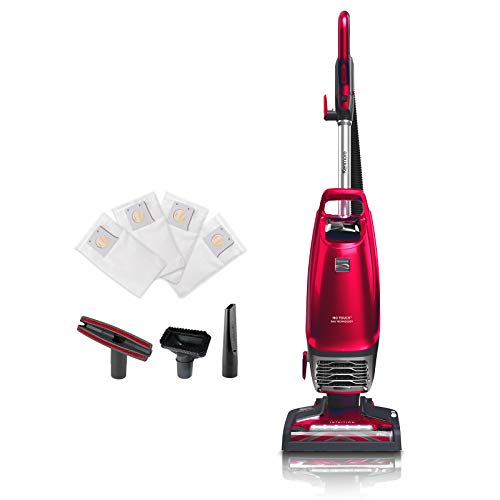
Kenmore Intuition Bagged Upright Vacuum Pet Friendly
$168.30 Check pricePrices change often - Shark
Shark Navigator Lift-Away Vacuum, HEPA, Pet Hair, White/Silver, NV356E
$199.99 Check pricePrices change often



Safety
Always unplug an upright vacuum before reaching into the brush roll area to clear wrapped hair, string, or debris. A brush roll can restart unexpectedly if the machine is still powered.
Common questions
Does a higher-priced upright vacuum always clean carpet better?
Not automatically. Carpet cleaning depends heavily on the brush roll design and how well it agitates the fibers, not just on motor power or price. A well-maintained, properly driven brush roll on a mid-priced upright can outperform a higher-priced model with a tangled or worn roller.
What is the difference between a bagged and bagless upright vacuum?
A bagged upright collects dust and debris inside a disposable bag that is sealed and thrown away when full, which tends to contain fine dust better during disposal. A bagless upright uses a clear canister that is emptied and sometimes rinsed by hand, avoiding the recurring cost of buying bags but requiring more hands-on maintenance.
Can an upright vacuum damage hardwood floors?
A stiff, carpet-oriented brush roll spinning directly against a sealed hardwood finish can cause fine scratching over repeated use. Many uprights include a hard-floor setting that lifts or slows the brush roll for this reason; check that a specific model offers this before using it regularly on hardwood.
How often should an upright vacuum bag or bin be emptied?
This depends on floor area, pet hair, and how often the vacuum is used, but a full-size bin generally needs emptying every one to three uses in an average home with pets. Emptying before the bin is completely full also helps maintain suction, since some designs lose airflow as the bin fills.
Is a heavier upright vacuum always more powerful?
No. Weight in an upright vacuum mostly reflects the size of the motor housing, bin, and chassis materials, not suction output. A compact, lighter model can still deliver adequate suction for its intended use case; check the manufacturer's stated suction or airflow figures rather than assuming weight predicts performance.
What does ball-steering mean on a Dyson upright?
Ball-steering replaces the fixed front wheels found on most uprights with a spherical pivot point, which is designed to make it easier to turn around furniture legs and tight corners without repositioning the whole machine. It affects maneuvering only; it does not change suction or floor cleaning performance.
Every figure here comes from published manufacturer specifications, owner reported measurements and repair documentation, and each is labelled as either a standard or a convention. This is researched general information to help you diagnose and plan, not professional advice, and it cannot tell you what is wrong with one particular machine. Your own manual and the part number printed on your machine are the final word.