Best vacuums for hardwood floors
Quick answer
For sealed hardwood, the Miele Classic C1 Pure Suction ($316.00) is the strongest dedicated pick, using a brush-only floor tool with no beater bar, the design least likely to mark a finish over time. Budget shoppers should look at the Eureka canister built specifically for hardwood floors ($119.00). For daily upkeep between deeper cleans, the roborock Qrevo Edge 2 ($1,099.99) is a slim, mop-equipped robot that fits under low furniture other robots cannot reach.

Dyson V8 Cyclone Cordless Vacuum
The Dyson V8 Cyclone is a lightweight cordless stick with a stated 60 minute runtime, a practical middle ground between a dedicated hard-floor canister and a full robot vacuum. It suits quick daily pickups on hardwood between deeper canister passes, and at $399.95 it sits comfortably between the entry-level and flagship picks without a bagged canister's extra weight for routine use.
The three tiers
Beginner: Eureka Bagless Canister for Hardwood Floor
A household with mostly bare floor and light carpet on a tight budget.- Beginner pick
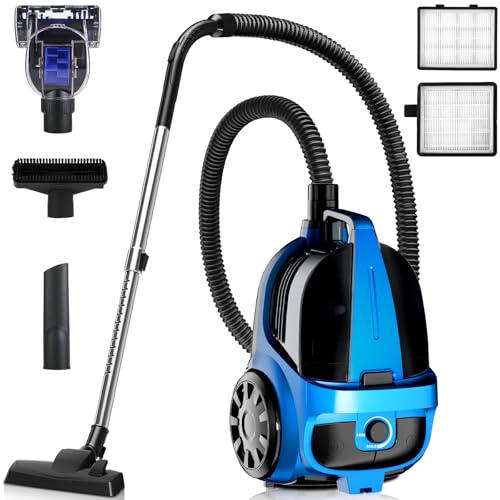
Eureka Bagless Canister Vacuum Cleaner, Vacuum for Hardwood Floor, Carpet
$119.00 Check pricePrices change often

Eureka markets this canister specifically for hardwood floor use, and the listing states a 16,000Pa suction figure. A canister keeps the motor body off the floor and lets the wand and hose do the work, avoiding a heavy brush head dragged across a finish the way some upright designs can. At $119.00 it is the least expensive dedicated option here.
Not for: A home with more than light carpet mixed in, since a hardwood-focused canister head is not built to agitate thicker pile the way a driven brush roll upright is.
Intermediate: Miele Classic C1 Pure Suction
A household that wants a purpose-built hardwood tool rather than a multi-surface head doing double duty.- Intermediate pick
Miele Classic C1 Pure Suction Vacuum for Hard Floors & Low-Pile Carpet
$316.00 Check pricePrices change often

The Pure Suction name describes the floor tool: a brush-only nozzle with no beater bar, the safest head design for a sealed hardwood finish since no bristles or agitator spin directly against the wood. It is a bagged canister, so dust stays sealed inside the bag rather than an open bin. At $316.00 it is purpose-built rather than a general multi-surface machine pressed into hardwood duty.
Not for: A home with meaningful carpet area elsewhere, since the Pure Suction head is deliberately built without the agitation carpet needs.
Expert: roborock Qrevo Edge 2
A household that wants automated daily upkeep on hardwood between manual deep cleans, and is willing to pay flagship price for it.- Expert pick
roborock Qrevo Edge 2 Robot Vacuum and Mop, 25,000Pa, 3.14'' Ultra-Slim
$1,099.99 Check pricePrices change often

The Qrevo Edge 2 lists 25,000Pa suction and a 3.14 inch ultra-slim body that fits under furniture other robots cannot reach, plus lidar navigation for mapped, repeatable coverage. Grit ground into hardwood over time is what causes surface scratching, and a daily scheduled pass addresses that by keeping grit from accumulating rather than through any single deep clean. At $1,099.99 it sits at the top of the robot vacuum category here.
Not for: A household that wants one machine to also deep clean thick carpet, since a robot's wheels and brush roll are not built for that, and anyone unwilling to manage an app-based schedule.
| Model | Price | Type | Floor head | Suction |
|---|---|---|---|---|
| Eureka Bagless Canister | $119.00 | Canister | Hardwood-specific nozzle | 16,000Pa |
| Miele Classic C1 Pure Suction | $316.00 | Canister | Brush-only, no beater bar | Not published |
| Dyson V8 Cyclone | $399.95 | Cordless stick | Multi-surface | Not published |
| roborock Qrevo Edge 2 | $1,099.99 | Robot, lidar | Vacuum and mop combo | 25,000Pa |
Why grit, not power, is what scratches hardwood
A sealed hardwood finish wears down over time from fine grit dragged across it, most often under a stiff bristle roll or foot traffic between cleanings, not from suction power. Frequency of cleaning generally matters more than raw suction for protecting a finish; a lower-powered machine used often typically protects hardwood better than a stronger one used rarely. This is also why a brush-only or soft roller head matters more here than on carpet, since a stiff, driven bristle roll excellent at agitating pile can contribute to fine surface marking over months of repeated contact with wood.
Soft roller versus brush-off heads
A soft roller head uses a felt or soft rubber roller to pick up fine dust and larger debris on bare floor without scratching. A brush-off or brush-only head, like the one on the Miele Pure Suction above, skips a powered roller entirely and relies on suction and a static brush strip. Both avoid the stiff bristle problem; the tradeoff for brush-only is less pickup on any carpet or rugs mixed into the same floor plan. Check a specific listing for which approach it uses before assuming a "hardwood" label means one design or the other.
What sealed hardwood tolerates, and what it does not
Sealed hardwood generally tolerates light dampness, which is why some wet-dry combo machines are marketed for hard floors. It does not tolerate standing water or repeated heavy wetting, which can work into seams between boards and cause warping or finish damage over time. A dry vacuum pass, whichever model above is chosen, carries no such risk since no liquid is involved.
Where a robot vacuum fits into a hardwood floor routine
A robot vacuum is not a replacement for periodic deeper cleaning with a canister or stick, but it addresses the frequency half of the grit problem well, running a short pass daily with no manual effort. The Qrevo Edge 2 above pairs that with a mop function for light residue, though robot mop pads wipe rather than scrub, so dried or stuck-on spills still need hand attention.
How we chose
We have not tested any of these vacuums in person. Every suction, floor head and navigation claim above is pulled directly from the manufacturer specifications published on the Amazon listing for that exact ASIN.
We prioritized listings that specifically describe a hardwood-safe floor head, either soft roller or brush-only, over general multi-surface listings with no stated head detail.
We picked one price tier from the bottom of the relevant categories, one from the middle, and one from at or near the top, rather than clustering picks in a single price band.
Owner-reported patterns referenced in the buying tips come from publicly visible review themes on the listings themselves, not our own use of the product.
Buying tips
Favor frequency over raw power for protecting a finish
Grit dragged across hardwood causes scratching over time, not suction strength. A lighter machine run often protects a finish better than a stronger one run rarely.
Confirm the floor head design before buying for hardwood only
Look specifically for a soft roller or brush-only, no-beater-bar head. A generic "multi-surface" description does not confirm which design is used.
Never let standing water sit on a sealed floor
Sealed hardwood tolerates light dampness but not standing water, which can work into board seams. Wipe up spills promptly regardless of which machine is used.
Pair daily automated passes with periodic deeper cleaning
A robot vacuum reduces grit buildup between cleanings, but a canister or stick pass on a regular schedule still catches what a robot misses along edges and under furniture.
Other options across the price range
An even spread from the bottom to the top of the category, not the six cheapest.
- RONEAIR
RONEAIR Cordless Vacuum Cleaner 40Kpa 45Min 6-in-1 Self-Standing
$65.99 Check pricePrices change often - roborock
roborock Qrevo S5V Robot Vacuum and Mop, FlexiArm Edge Mopping
$499.98 Check pricePrices change often



Safety
Sealed hardwood tolerates light dampness but never standing water. Wipe up any spill from a wet-dry or mop-equipped machine promptly to avoid moisture working into board seams.
Common questions
What actually scratches hardwood floors during vacuuming?
Fine grit dragged across the finish under a stiff, driven bristle roll or under foot traffic is the main cause, not suction power. This is why frequency of cleaning and the floor head design matter more than a higher Pa or air watts figure.
What is the difference between a soft roller and a brush-off head?
A soft roller uses a felt or soft rubber roller for dust and larger debris on bare floor without scratching. A brush-off or brush-only head, used on the Miele Pure Suction above, has no powered roller and relies on suction and a static brush strip, good on hardwood but weaker on carpet.
Can I use a robot vacuum as my only cleaning method for hardwood?
A robot handles daily grit buildup well, the main driver of scratching over time, but will miss tight edges and areas under low furniture depending on its size. Pairing a daily robot pass with periodic deeper cleaning from a canister or stick generally covers more than either alone.
Is it safe to mop sealed hardwood with a wet-dry vacuum?
Sealed hardwood tolerates light dampness, which is why some hard-floor combo machines are marketed for this use, but not standing water or repeated heavy wetting, which can seep into board seams. Follow the specific manufacturer guidance before using any wet-dry or mopping product on hardwood.
Does a higher Pa or air watts figure mean better hardwood cleaning?
Not directly. Pickup on bare floor depends more on the floor head design than raw suction figures. A lower-suction machine with the right head will often outperform a higher-suction machine using an aggressive carpet-style brush roll on the same hardwood.
Do I need a different vacuum for hardwood and carpet in the same home?
Not necessarily. Many canisters and cordless sticks ship with interchangeable heads or a single head that adjusts between surfaces. A dedicated brush-only head like the Miele Pure Suction above is optimized for hardwood and works less well on thicker carpet, so check the head design against the actual floor mix.
Every figure here comes from published manufacturer specifications, owner reported measurements and repair documentation, and each is labelled as either a standard or a convention. This is researched general information to help you diagnose and plan, not professional advice, and it cannot tell you what is wrong with one particular machine. Your own manual and the part number printed on your machine are the final word.